Welcome to the website of Hebi Yuxing Coal Machinery Co., Ltd.!
Hotline:

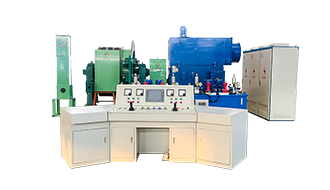
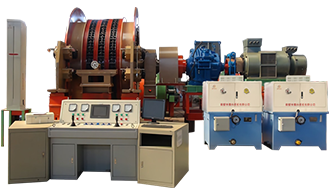

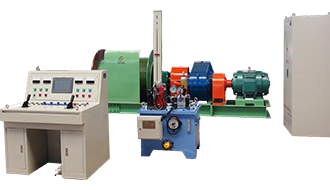

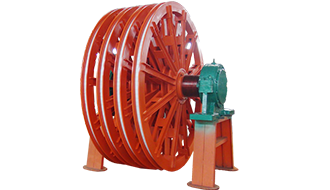
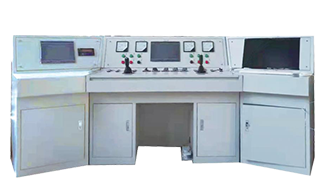
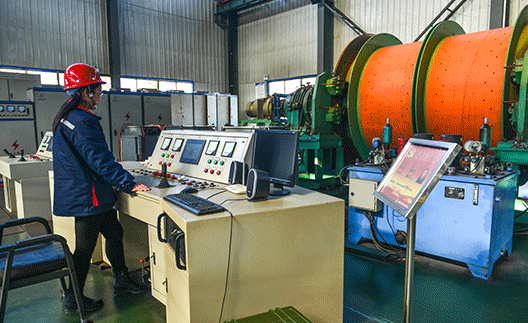
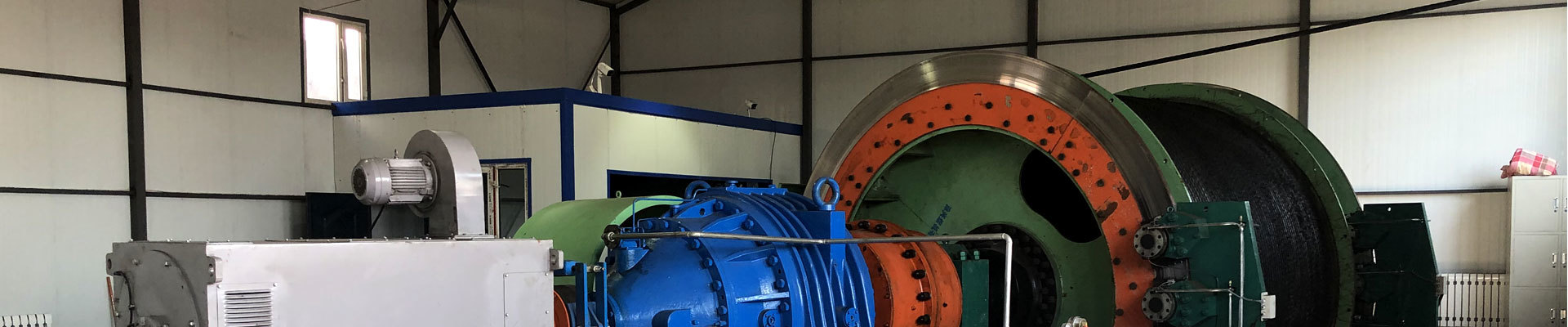
Mine hoisting system
2022-12-14
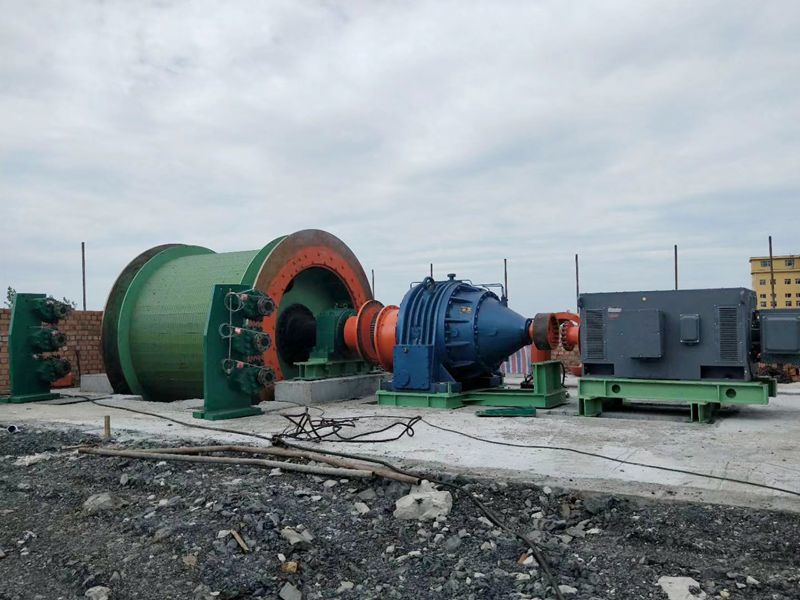
The mine hoisting system is used to transport ore, coal, waste rock, or gangue up and down the mine shaft, as well as to lift and lower personnel, equipment, and materials. Mine hoisting refers specifically to the process of moving ore, coal, waste rock, or gangue through the mine shaft, along with transporting and lifting people, machinery, and supplies.
Shaft hoisting system:
The shaft-based double skip hoisting system uses skips as the lifting containers: while one skip automatically loads coal in the bottom-level bunker and is hoisted to the surface for unloading, another skip descends from the surface to the underground coal bunker to be loaded with coal. The hoist can either feature a wrapped drum design or a multi-rope friction wheel system—though the latter is rapidly gaining popularity—and its installation options include tower-mounted or ground-level setups. This type of hoisting system is primarily employed as the main shaft hoisting system in large and medium-sized mines. In contrast, the shaft-based double cage hoisting system utilizes cages as the lifting containers, making it ideal for auxiliary shaft operations in large and medium-sized mines. It’s mainly used to transport waste rock, gangue, personnel, materials, and equipment.
Inclined shaft hoisting system:
The inclined shaft skip hoisting system operates in the same way as the shaft skip hoisting system (Figure 2). It is used for lifting operations in inclined shafts with higher production rates or where the shaft inclination exceeds 25°. The inclined shaft cage hoisting system, meanwhile, is now rarely employed.
The inclined shaft cage hoisting system uses mine cars as the lifting containers, with options for single-hook or double-hook systems. However, it must be equipped with an anti-runaway device to prevent accidents caused by runaway cars. This system requires minimal investment and allows for rapid construction, making it particularly suitable for inclined shafts with lower production capacities.
According to safety regulations, main inclined shafts where personnel ascend and descend—and whose vertical depth exceeds 50 meters—must be equipped with mechanical systems designed to transport people. One such system is the inclined shaft man-car. This type of system must include a reliable rope-break protection device to prevent falls, as well as a secure signaling system.
It is divided into two methods: AC wound-rotor asynchronous motor drive and DC separately excited motor drive. DC drive offers excellent speed control performance, consumes less power during speed regulation, allows for convenient mode switching, and is easier to automate—but it requires a set of rectification equipment, resulting in higher initial investment costs. The development of high-power thyristor-based rectifier systems has significantly boosted the adoption of DC drives. In China, DC drives are typically considered for single-machine capacities exceeding 1,000 kW. On the other hand, AC drives are favored for their simplicity, lower investment costs, and suitability for smaller-capacity applications. Mine hoisting equipment is increasingly moving toward automated control systems. While main shaft hoists have already achieved full automation, auxiliary shaft hoists, which experience significant load fluctuations, generally rely on remote-control methods to implement semi-automation.

Follow us

Hebi Yuxing Coal Machinery Co., Ltd.
Hotline:+86-13939219076
Technical Consultation:+86-13503925535
Address: Yuxing Industrial Park, Shancheng, Hebi City, Henan Province
You are a helpful assistant.


Copyright © Hebi Yuxing Coal Machinery Co., Ltd. SEO tags Business license




Copyright © Hebi Yuxing Coal Machinery Co., Ltd.Business license
This website supports IPv6 and SEO tags.