Welcome to the website of Hebi Yuxing Coal Machinery Co., Ltd.!
Hotline:

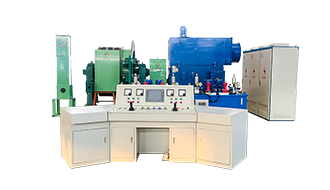
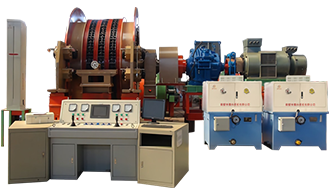

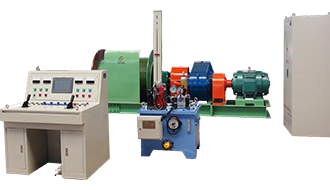

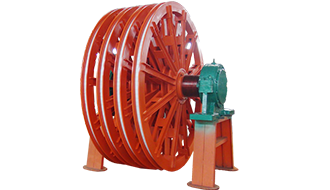
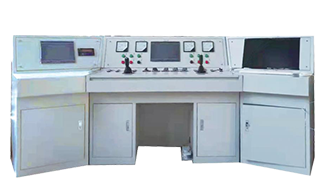
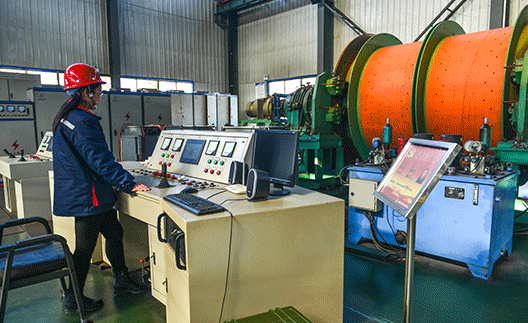
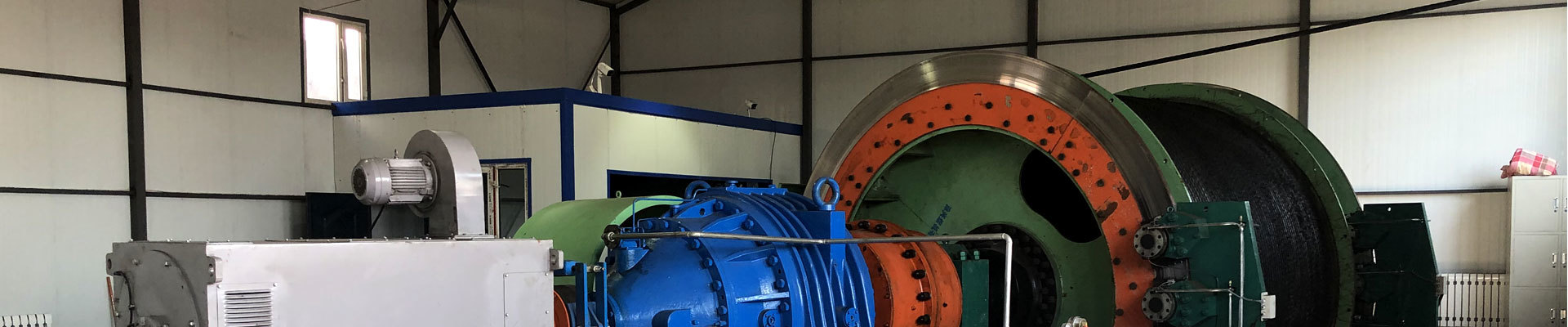
Mine hoisting winch
2024-02-19
A mine hoist is a type of large-capacity winch used to raise and lower containers—such as cage cars or skip buckets—within the shaft via steel cables. , Complete the tasks of transporting materials and personnel. Modern mine hoists boast high lifting capacity and speed, evolving into fully automated, heavy-duty mining machinery controlled by electronic computers. Mine hoisting systems are installed either at ground level or underground, using steel cables to drive hoisting containers along shafts or inclined tracks. They are categorized into "winding hoists" and " "Friction-type hoist."
Accessories include multi-rope friction winches and single-rope winding winches: such as Sky wheel, depth indicator, hydraulic station, electrical control system, operator console, motor, and gearbox Various sizes and models of accessories available. [Scroll down to view details on accessory usage and model specifications]
· The task of mining hoists
1 ) Enhancing valuable minerals, ores, and coal.
2 ) Enhancing the handling of waste rock and coal slime generated during underground production processes.
3 ) Lifting and lowering personnel, transporting equipment, and delivering materials.
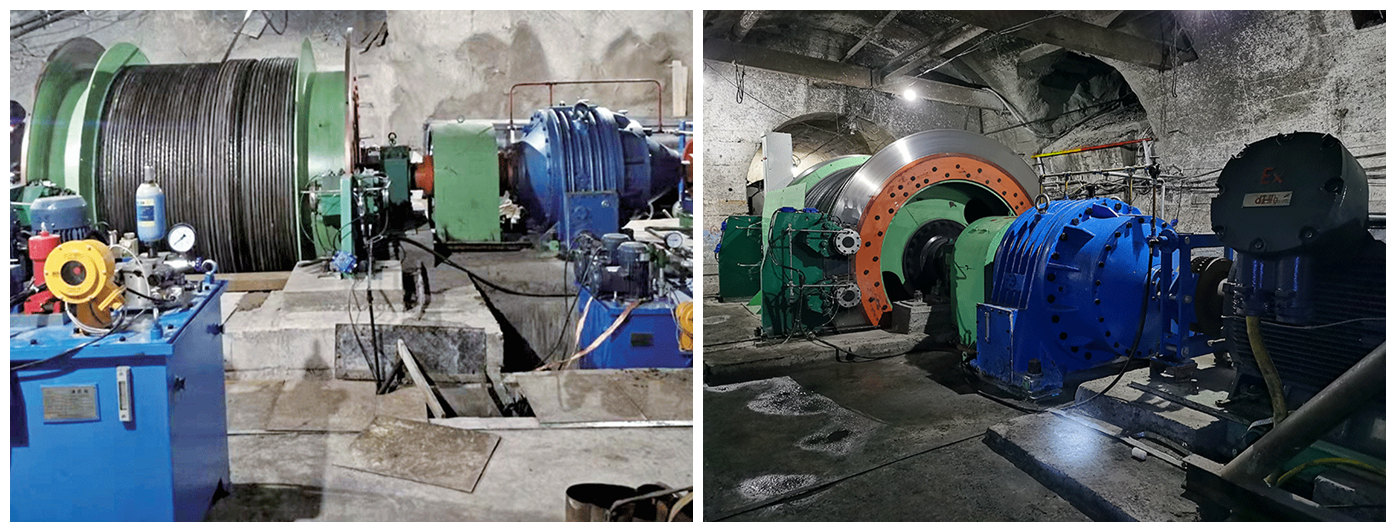
· The main components of a mine hoist
The main components of mine hoisting equipment include : Enhancing steel wire ropes, mine hoists, electrical control systems, hoisting containers, headframes, skip wheels, and shaft equipment ( It consists of components such as the guide rails and beam supports. Typically, mine hoists are equipped with two lifting containers. , Moreover, the two hoisting containers move in opposite directions in a straight line within the mine shaft—specifically, while one container ascends at a steady speed, the other descends at the same speed.
· Mine hoists are classified differently depending on various criteria.
(1) Based on the connection method of the steel wire rope on the drum, hoists are classified into wrapped-type and friction-type hoists. [ Multi-round, single-round ( Floor-standing , Well-tower type )]
(2) Based on whether they are used above ground or underground, hoists are classified as surface-mounted and underground-type hoists. [ Electrical explosion-proof, hydraulic transmission, and other transmissions ]
(3) Classified by drum structure type, it includes cylindrical drums and separable cylindrical drums.
(4) Classified by electrical drive type, it includes AC and DC models.
(5) Classified by transmission type, it includes electric transmission and hydraulic transmission.
(6) Based on the number of lifting ropes, it is classified into single-rope winding type and multi-rope friction type.
(7) Classified by the number of drums, it includes single-drum and multi-drum types.
| · Working Principle of Single-Rope Winding Hoists The wrapped-type hoist uses the winding and unwinding of a steel cable around a drum to lift and lower containers. One end of the steel cable is fixed to the drum, while the other end passes over a sheave and connects to the lifting container. When the drum is driven by an electric motor to rotate in different directions, , The steel wire rope is either wound onto or released from the drum to drive the hoisting container. A winding-type double-drum hoist features two drums, with one steel wire rope fixed to each drum—crucially, the ropes are wound in opposite directions on the two drums. |
· The working principle of a friction hoist The working principle of a friction hoist is based on transmitting power through friction. The steel wire rope rests on the friction lining of the friction wheel, while the lifting containers are suspended from both ends of the rope. Additionally, a balance wire rope is attached beneath each container. When the hoist operates, the tensioned steel wire rope presses firmly against the friction linings with a specific normal force, generating frictional force. It is this frictional force that enables the steel wire rope to move the lifting containers upward. Moves along with the friction wheel, thereby enabling the container to be lifted or lowered. |
· Comparison between Multi-Rope Friction Hoists and Single-Rope Winding Hoists
| · Advantages 1) Friction-type elevators typically use multiple steel cables. Under the same conditions, each cable has a thinner diameter, resulting in a correspondingly smaller friction wheel diameter and narrower width. This leads to a reduction in the overall size and weight of the elevator system. 2) Due to the small diameter of the friction wheel, a higher-speed motor and a lighter reducer can be used at the same lifting speed. 3) Multiple steel cables lift simultaneously, ensuring stability. The device performs well. 4 ) Even-numbered strand steel cables, with strands twisted equally in both left and right directions, eliminating It prevents the container from rotating during lifting, thereby reducing friction between the container's lug and the guide rail. |
· Drawbacks 1 ) The tasks involved in suspending, adjusting, replacing, inspecting, and maintaining multiple lifting steel cables along with balance cables are quite complex and challenging. 2 ) Since the steel ropes of friction-type hoists cannot be tested, their service life must not exceed two years. When one rope needs replacement, to ensure that all ropes maintain identical working conditions, it is necessary to replace the entire set of ropes. 3 ) Excessive oiling is not permitted on the exterior of steel cables; instead, use a special wear-resistant grease. |
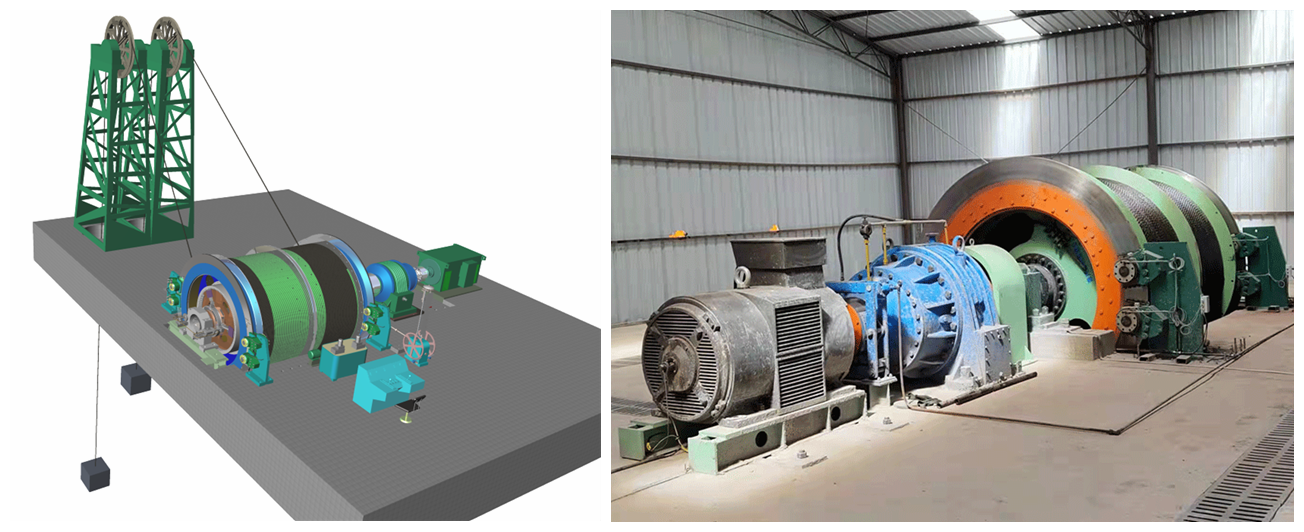
Single-rope winding mine hoist model specifications
 |
 |
Multi-rope Friction Mine Hoist Model Parameters

|
|
|


· Hoist speed requirements
The acceleration and deceleration when using cage hoists to raise or lower personnel in a shaft must not exceed 0.75m/s2 , its Maximum speed must not exceed v = 0.5√n The obtained value, and The maximum shall not exceed 12m/s。
The speed of inclined shaft hoisting containers when lifting personnel or materials must not exceed 5m/s , and must not exceed the designed capacity for people and vehicles Maximum permitted speed. The acceleration and deceleration during the lifting or lowering of personnel must not exceed 0.5m/s2。
· Main Components of the Mine's Main Hoisting System
The mine hoist system isn’t just the hoisting mechanism shown above—it also includes a lubrication system, a mechanical transmission system, an observation and control system, a traction control and automatic protection system, as well as a braking system, among other components.

· 1 ) Spindle Assembly
1. Wrapping or lowering the hoisting wire rope
2. Withstand various normal loads and transfer these loads through the bearings to the foundation.
3. Withstanding extreme loads caused by various emergency situations
4. When changing the lifting level, adjust the length of the wire rope. ( Only Xian Double-Drum Hoist )
| ·Types The rope adjustment clutch can be divided into three types—gear-type. Lever clutch, friction clutch, worm gear clutch. Our mine's hoist system uses a gear clutch. |
·Function Enable the floating drum to connect with or disengage from the main shaft, So that when adjusting the rope length or changing the lifting level, Enable relative motion between the traveling roller and the fixed roller. |
· Rope Adjustment Clutch
·2) Gear reducer
The role of the hoist reducer : ( Complete range of single-rope winding and multi-rope friction-type gear reducers
1) Reduce the motor's output speed to the working speed required by the drum.
2 ) Increase the motor's output force or torque to match the force or torque required by the drum. Common structural types : Parallel-Axis Gear Reducers and Involute Planetary Gear Reducers
·3) Electric motor
The role of the motor : Powering the entire working system. We offer a complete range of specifications and models for both single-rope winding motors and multi-rope friction motors.

·4) Depth Indicator
| The depth indicator is an essential auxiliary device for mine hoists. Currently, disc-type and gantry-type depth indicators are widely used in China's hoisting systems. At our mine, we exclusively use gantry-type depth indicators—both mechanical and electronic versions. Effect :
|
|

·5) Braking System
The mine hoisting system's braking mechanism consists of a brake and a hydraulic station.
Effect :
1) Normal Service Braking : Specifically, it involves participating in the hoist's speed control during the deceleration phase. ;
2 ) Normal service braking : That is, brake the hoist when lifting is complete or during a stop. ;
3 ) An Quan Brake : That is, when the hoist malfunctions or an emergency occurs, promptly and effectively brake the hoist. ;
4) ) The dual-drum hoist can brake the traveling drum and release the fixed drum when replacing the level, adjusting the rope length, or changing the wire rope.
·6) The primary function of the hydraulic station
 |
1 ) Provides continuously adjustable pressurized oil to the disc brake, enabling different braking torques and ensuring effective service braking. 2 ) The system oil pressure can be quickly reduced to a pre-set value as needed, held at that level for a certain period, and then rapidly dropped to zero, enabling safe operation with two-stage braking. Quan brakes. 3 ) Secondary braking can be released as needed, allowing for safe operation with only primary braking applied. Quan Brake 4 ) The hydraulic station provides the pressurized oil required for the rope-adjusting clutch. |
The depth indicator is an essential auxiliary device for mine hoists. Currently, disc-type and gantry-type depth indicators are widely used in China's hoisting systems. At our mine, we exclusively use gantry-type depth indicators—both mechanical and electronic versions. Effect :
|
·7) Braking System
Wellhead Level-One Safety Quan Brake : When the failure occurs very close to the parking point—specifically, at the wellhead—the braking system should immediately engage the first-level emergency brake, causing the entire oil pressure in the disc brakes to rapidly drop back to zero. This will put the hoisting system into full-brake mode, ensuring reliable braking of the hoist and preventing overwinding or over-lowering accidents.
Second-level safety in the well Quan Brake : When the electro-hydraulic proportional relief valve fails to function properly or malfunctions, or if other uncontrollable incidents cause the constant-deceleration braking system to fail, immediate activation of the secondary braking mechanism is required. As a result, the oil pressure in the disc brakes rapidly drops to a pre-set, predetermined value. , After the extension , The entire oil pressure value of the disc brake rapidly returns to zero, bringing the lifting system to a fully braked state.
·8) Disc brake
| The brake is the component that directly acts on the brake wheel or brake disc to generate braking torque, and it is categorized into disc-type and block-type brakes. ; Disc brakes for both single-rope winding and multi-rope friction systems are available in a full range of specifications and models. (1) Structure 1 , Disc Brake 2 , Brake shoe wear and spring fatigue switch 3 High-pressure oil pipe 4 Brake bracket 5 , Oil-leakage pipe 6 , YouTube switch 7 , Oil-collecting bottle one 8 High-strength studs and nuts (2) How it works The disc brake consists of brake pads, disc springs, hydraulic components, lining plates with a cylindrical body, and the brake housing itself. The braking force is provided by the disc springs, while releasing the brake is achieved using high-pressure oil supplied by the hydraulic station. |
|

·9) Electrical Control System
Complete range of power ratings and specifications for ground-based and underground winch electrical controls used in single-rope winding elevators and multi-rope friction elevators.
The system consists of a motor forward/reverse circuit, rotor resistance control circuit, manually adjustable brake circuit, signal indication circuit, fault-start circuit, and safety features. It consists of components such as the interlocking protection circuit.
Based on the severity levels of the signals, the faults are categorized into three distinct types, providing a clear framework that simplifies the process of identifying and resolving actual issues.
An Quan Circuit : After the failure occurred, the hoist immediately engaged its mechanical brake by applying the holding brake, preventing the hoist from restarting until the fault is reset.
Electrical Parking Circuit : After the fault occurs, the system will immediately initiate an electrical stop. Following this, the hoist will remain disabled until the fault is reset.
Lockout circuit : After the fault occurs, the hoist is still allowed to complete the current lifting operation. However, once this cycle is finished, the hoist will be locked and unable to start until the fault is reset.
Effect :
Electrical control equipment is used to manage the startup, acceleration, constant-speed operation, and deceleration of mining hoists, and it includes essential electrical protection and interlocking mechanisms.
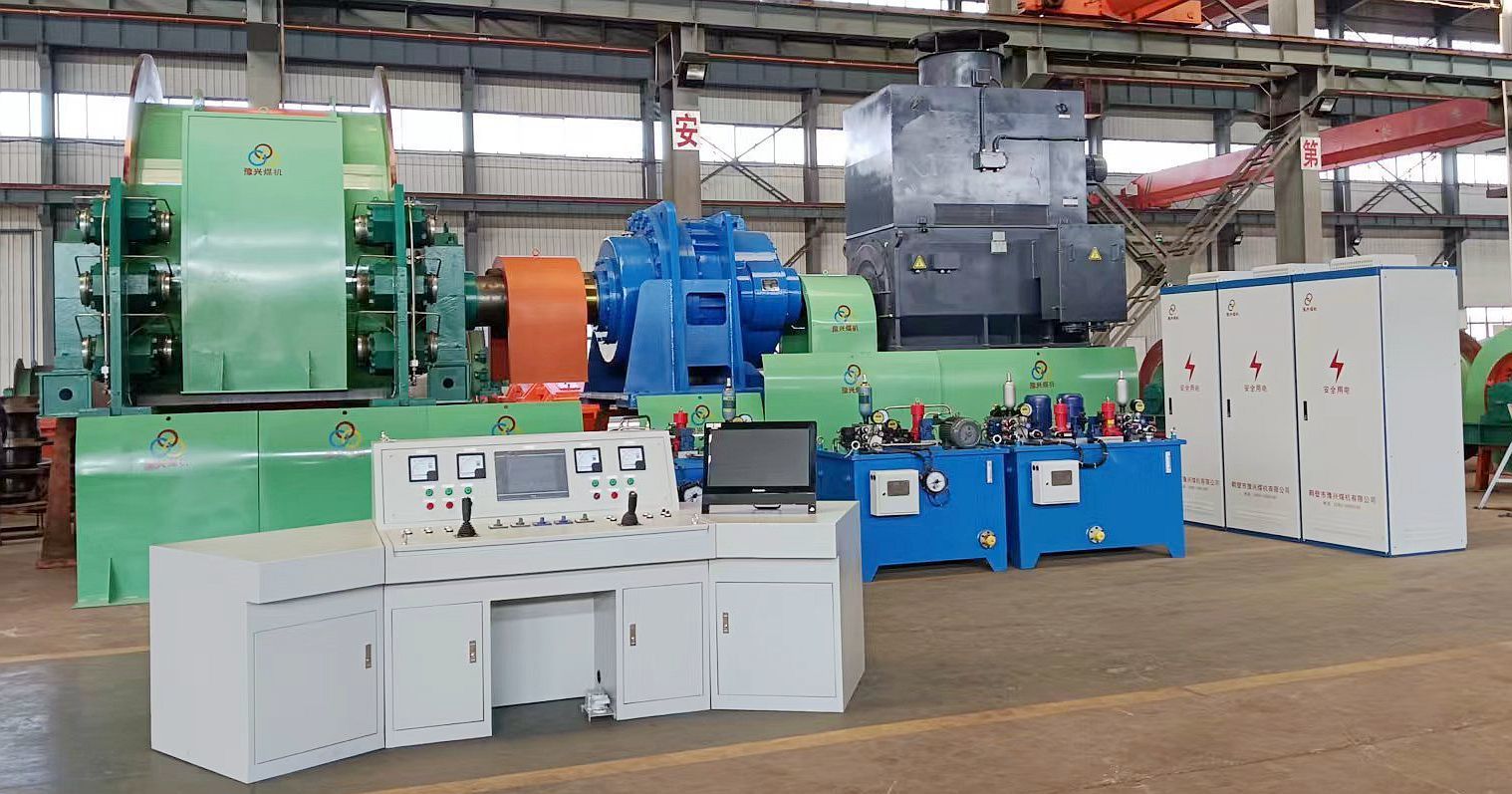
① Conventional Electronic Control
Main Configuration : Stator panel, rotor panel, relay panel, dynamic braking panel, control panel, metal resistors
How it works : The series resistance speed control method involves connecting metal resistors into the rotor circuit of a wound-rotor induction motor and gradually removing these resistors using a controller to achieve speed adjustment. The induction motor + Rotor resistance boosting acceleration + High-voltage contactor commutation + Use dynamic braking to slow down.
Advantages : Low initial investment cost and simple equipment make maintenance convenient. However, the drawbacks are... : After the equipment is operational, there is resource wastage and poor speed control performance.
② PLC Variable-frequency electronic control
Main Configuration : Power cabinet, control console, PLC Control cabinets, variable frequency drives, tachogenerators, shaft encoders, and more
How it works : Adopting a dual approach PLC Control, meeting the requirements of "Coal Mine Safety" The "Quan Regulations" uphold the dual-track system requirement, ensuring that, in addition to performing the logical operations necessary for manual and semi-automatic operation of the winch, the system also receives pulse signals from the encoder via a high-speed counter module. This enables precise calculation and real-time display of the cage (or mine car)’s current position and speed, thereby providing reliable soft deceleration points as well as over-speed and over-wind protection mechanisms.
Advantages : System Security Quan is reliable, offering precise speed control, energy efficiency, excellent motor performance, and stable operation.
·10) Sky Wheel Device
The sky wheel can be divided into three types. Inoue offers a complete range of fixed sheaves—available in both single-rope winding and multi-rope friction models—including those specifically designed for shaft sinking and underground applications, as well as traveling sheaves. These fixed pulleys, mounted atop mine shaft derricks or in the headframes of inclined shafts, precisely adjust the direction of steel wire ropes. They support the weight of cage systems, buckets, or skip hoists—and are often regarded as iconic symbols of mining operations. (Installed either on the derrick structure or within the headframe, these sheaves serve as critical guide wheels that direct the movement of lifting cables.) All products comply with standards set by the Ministry of Coal Industry.
 |
 |
For more details, visit us online for further inquiries. Or Call the page number

Follow us

Hebi Yuxing Coal Machinery Co., Ltd.
Hotline:+86-13939219076
Technical Consultation:+86-13503925535
Address: Yuxing Industrial Park, Shancheng, Hebi City, Henan Province
You are a helpful assistant.


Copyright © Hebi Yuxing Coal Machinery Co., Ltd. SEO tags Business license




Copyright © Hebi Yuxing Coal Machinery Co., Ltd.Business license
This website supports IPv6 and SEO tags.